

From Firefighting to Proactive Planning: How Hillhouse Turned Reliability into Competitive Advantage
- Feb 18
- 4 min read
In asphalt production, reliability is a non-negotiable. With increasing pressure to maximise production and meet strict deadlines, Hillhouse identified the need to deliberately shift from reactive to proactive maintenance. Read on to learn how they transformed their approach, with support from Sensoteq and Ammann, to turn site reliability into a source of competitive advantage.
The Operational Reality
David Davies, Asphalt Plant Maintenance Manager at Hillhouse, has spent the past decade with the business, building deep operational knowledge along the way. Today, he oversees asset availability across four asphalt plants, leading a maintenance team that includes two fitters who carry out structured daily and monthly manual inspections to keep critical equipment running reliably.
Downtime doesn’t just affect maintenance; it impacts:
Sales
Production
Commercial performance
Customer reputation
That pressure impacts the on-site maintenance team. Keeping plant availability as high as possible, across multiple sites, with limited personnel, requires more than hard work; it requires increased asset visibility.

The Cost of Breakdowns in Asphalt
As Andy Baird, After-Sales Manager at Ammann UK, explains, asphalt plants operate in extremely harsh environments.
Breakdowns lead to:
Financially burdens
Operational disruptions
Further downtime due to long lead times on parts
Gearboxes and motors alone can range between £2,000 and £25,000. When failures occur unexpectedly, costs escalate quickly, both financially and operationally. Andy recognised that the harsh conditions demanded a proven, robust solution, which is why he introduced Hillhouse to Sensoteq
An Industry Under Pressure
Sensoteq brings extensive experience across the mining and aggregates sector, with a deep understanding of the operational pressures customers face and the practical solutions required to address them.
What Hillhouse was experiencing is not unique. Helen Sheehy, Global Sales Manager at Sensoteq, highlights a challenge affecting heavy industry as a whole:
Skills shortage
Ageing workforce
Fewer experienced fitters are entering the trade
Increasingly complex plants
Rising production demands
Maintenance teams covering more sites with fewer people
Historically, experienced engineers could rely on instinct, listening to machines and spotting subtle changes. Unfortunately, instinct doesn’t scale, and modern operations require continuous visibility to support decision-making, especially when those experienced resources are stretched thin.
So, what was the solution?
From Reactive to Proactive Maintenance
For Hillhouse, implementing wireless condition monitoring fundamentally changed how maintenance decisions were made. With Sensoteq sensors installed across critical assets, David no longer relies solely on routine inspections or reactive repairs. He receives early warning alerts when machine behaviour begins to change, often long before a failure occurs.
Instead of routine inspections alone determining workload, the system helps direct attention where it’s needed most.
“If I get an alert, I can then move my guys to go and inspect what that fault potentially is.”
This seemingly simple change has powerful implications:
Engineers are deployed based on machine condition, not guesswork
Time is used more effectively
Minor issues are caught early
Expensive failures are avoided
Early warning detection protects high-value assets and prevents reactive firefighting.
Providing Hillhouse with Ongoing Support
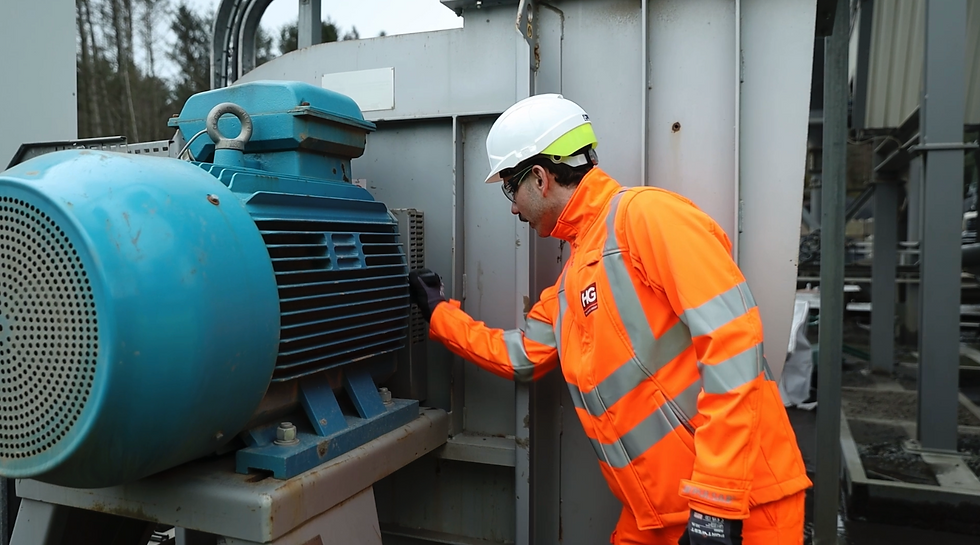
Reid Truesdale operates as a mobile mechanical fitter across all four plants. Without clear prioritisation, that role could quickly become reactive and stretched. Hillhouse receives vibration reports every month from Sensoteq’s in-house experts, empowering Reid to prioritise his time.
Now, monthly reports highlight:
Where action is required
What issues are emerging
Which assets require attention
In a lean team structure, directing each employee's time effectively is critical. Every hour matters and every second counts. Robert, Sensoteq’s dedicated vibration analyst for Hillhouse, translates vibration signals into clear, actionable maintenance insights.
This allows the team to:
Quickly triage issues
Prioritise critical repairs
Intervene before faults escalate
Make confident decisions without data overload
Robert has already identified and translated several potential issues into clear, actionable insights for the Hillhouse team, showcasing the value of expert analysis and the system’s seamless plug-and-play capability. The graphs below show vibration patterns on a mixer's gearbox, indicating looseness.
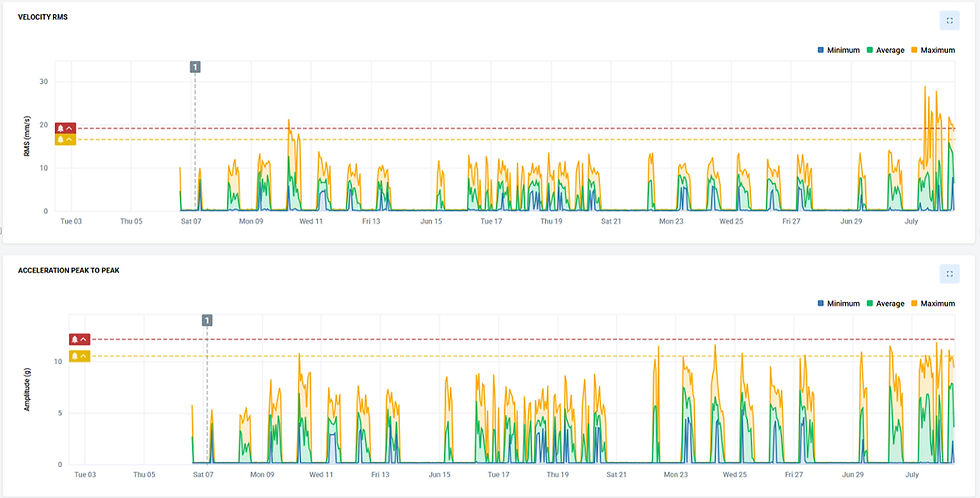

With this information, David could advise his team to swiftly investigate the source of the alarm.
As Reid explains:
“By using the sensors, it directs me in the right areas to know where problems are or where problems could be arising. My time is used to the best of its ability.”

The Result
Hillhouse already had strong people within the business. Condition monitoring didn’t replace them; it empowered them.
Reid:
“This is a great system that just means that we’re not in this alone. We’re able to phone, and they walk us through even the slightest thing.”
David:
“With condition monitoring, it allows us to place people in the right place at the right time, so we’re more proactive instead of being reactive.”
This is where reliability becomes a competitive advantage.
Instead of:
Firefighting breakdowns
Absorbing downtime pressure
Stretching limited resources
They can now:
Plan interventions
Prioritise strategically
Protect production
Maintain reputation
Operate with confidence
In a competitive resource environment, marginal gains matter.
Earlier fault detection extends planning windows.
Proactive maintenance reduces avoidable spend.
Consistent uptime protects customer delivery.
Across heavy industry, maintenance teams are under increasing pressure to achieve more with limited resources. Hillhouse’s shift demonstrates that reliability is not just a maintenance metric; it is a strategic capability. Organisations that move from firefighting to proactive planning create a structural advantage over competitors still operating reactively.
The result?
A confident maintenance team.
A predictable, understandable plant.
A competitive, high-performing business.
Ready to Strengthen your Reliability Strategy
Hillhouse’s journey shows what’s possible when sites move from reactive firefighting to proactive, data-driven maintenance and assisted decision making. If your site is dealing with stretched resources, unplanned downtime and increasing pressure to deliver, a structured reliability strategy can improve asset visibility and ensure confidence across your operation.
Ready to Move from Reactive to Proactive?
Book a no-obligation condition monitoring assessment.
Understand your current risk profile and identify opportunities to move from reactive maintenance to proactive planning.


